Все то, что существует в природе, подчинено необходимому условию быть измеряему
Н.И. Лобачевский
Ближайшие события
30.09.2026
Город:
Москва
15.10.2026 - 16.10.2026
Город:
Москва
19.10.2026 - 23.10.2026
Город:
Москва
21.10.2026 - 23.10.2026
Город:
Волгоград
18.11.2026 - 20.11.2026
Город:
Санкт-Петербург
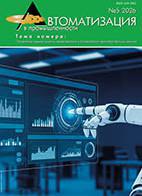
#5 2026
CONTENTS №5
Dozortsev V.M., Pogorelov V.P., Agafonov D.V., Anosov A.A. Slastenov I.V., Frolov A.I. Computerized training of process operators: stagnation or the path to a new transformation. History, market, possible breakthrough directions, import substitution
The paper overviews the history of origin and development of operator training simulators (OTS). The evolution of OTS is outlined from the first mainframe systems to adaptable intelligent simulators on local PC networks. Global OTS market indicators and forecasts are presented. Trends in modern OTS design are described: cloud solutions, digital twins of training systems, immersive user interfaces, the use of artificial intelligence for operator instruction, personalization, and evaluation of training results. The problems of the substitution of global OTS vendors in the domestic market and the outlook for the development of Russian training systems are discussed.
Keywords: operator training simulators, simulation process modeling, operator interfaces, computer-aided instruction, digital twins, automatic estimation of operator’s actions, virtual and augmented reality, adapted intelligent simulators.
Kazymov I.M., Kompaneets B.S. Automated control system for lifting devices and industrial equipment
The paper proposes a method for automated coordinate control of lifting devices and equipment at industrial enterprises. It presents structural diagrams of the automated control mechanism for cargo movement and mechanisms of lifting equipment, as well as the operating algorithm of the automated control system for lifting equipment. The results of testing the method at the production and technical facilities of the I.I. Polzunov Altai State Technical University are presented.
Keywords: automated equipment control system, lifting equipment, coordinate control, automatic control system.
Kobrunov I.A., Proletarsky A.V. Investigation of CAN bus load balancing strategies
The efficiency of any distributed control system depends on the quality of network interaction. The paper discusses the strategies for distributing the load on the CAN bus using the basic principle of quantizing the network channel time. The minimization criteria are the message processing time and the probability of message contention for the network channel. Two strategies are considered: batch message sending and network channel capturing. Their comparative analysis was carried out with the example of a multiplex control system protocol using a special criterion for assessing the effectiveness of network interaction in systems based on the CAN protocol.
Keywords: network interaction, CAN protocol, distributed control system.
Vinogradov A.I. Automated control system for heat and moisture treatment of reinforced concrete articles
The paper presents a control system for accelerated hardening of concrete under the influence of saturated water vapor in curing pits. The use of the system reduces the production cycle for the manufacture of reinforced concrete products. The system was implemented at the reinforced concrete plant in Primorsky Krai (Russia).
Keywords: automated control systems, process monitoring, reinforced concrete articles.
Discussing a Topic…
Building a unified model for production data representation and reconciliation
Halyasmaa A.I., Porshnev S.V. Automated diagnostic systems for electric power equipment: status, architecture, and data integration issues
Automation of control and diagnostics of equipment at power facilities is a necessary condition for increasing the reliability and efficiency of the energy infrastructure. The paper examines a typical electric power facility: an electric power station (substation) with high-voltage equipment of open switchgear of 500, 220, and 110 kV voltage classes. It undertakes the systemic analysis of the regulatory and technical framework that defines the requirements for diagnostic methods and tools, and outlines the architectural principles underlying automated systems for equipment health monitoring. The focus is made on structural models of representation of diagnostic data on the typical object under consideration: temporal, relational and hierarchical and their influence on information of integration and interpretation processes. Methodological and technical restrictions of current diagnostic practices are identified, caused by the fragmentation of information flows, the lack of a unified equipment identification system, low data consistency, and insufficient automation of analytical procedures. It is shown that removing these restrictions requires the development of a unified methodology for the structural synthesis of heterogeneous data warehouses and the construction of an end-to-end architecture for digital equipment health monitoring.
Keywords: high-voltage equipment, technical state, diagnostics, monitoring, regulatory framework, digital power engineering, risk-oriented control.
Kuznetsov A.Yu., Reshetnikov I.S. End-to-end digital model of industrial enterprise production data
The paper discusses the requirements for an end-to-end digital model of production data of an industrial enterprise, covering basic and auxiliary processes. It shows that the task cannot be reduced to maintaining technological reference data but rather requires the development of a unified object model that includes operational data on planning, execution, logistics, quality control, and equipment health. The applicability of ISA-95 (GOST R IEC 62264) is substantiated as of a model’s basic framework. The focus is made on the engineering interpretation of the standard and its exemplification in the design of a corporate semantic dictionary and operational digital twin.
Keywords: end-to-end digital model, operational digital twin, production data, integration of information systems, quality control.
Poborueva M.S. Adaptive models for network traffic control in heterogeneous IIoT networks based on graph neural networks, taking into account dynamic failures and cyberattacks
The paper examines adaptive models of network traffic control in heterogeneous Industrial Internet of Things (IIoT) networks operating under conditions of dynamic failures and cyberattacks. It proposes an approach based on a hybrid graph neural network (GNN) architecture, combining convolutional layers to allow for the topology and an attention mechanism to filter out abnormal signals from compromised nodes. A mathematical model of the network is presented in the form of a weighted directed graph with dynamically adjusted edge weights. An experimental evaluation conducted in the NS-3 simulation environment for networks of up to 2000 nodes with an embedded attacker model (up to 15% of nodes compromised, simulating DDoS and gray hole attacks) showed that the proposed algorithm provides a transmission success rate of over 92% under conditions where traditional protocols lose up to 11.8% of packets. The proposed models can be used in industrial control systems with increased requirements for cyber resilience and reliability.
Keywords: Industrial Internet of Things, adaptive control, graph neural networks, routing, network traffic, сyber resilience.
Suslov A.V., Muratova V.V., Tyurin E.A., Sharafutdinov D.R. A method for continuous monitoring of bottom sediments in vertical steel tanks based on pressure distribution measurement
The paper addresses the problem of monitoring the level of bottom sediments in vertical steel tanks used in the oil and gas industry. Today, the volume of sludge is typically measured manually using measuring tapes and stationary level gages. These methods feature high labor intensity, low accuracy due to the locality of measurements and the impossibility of quickly developing a complete map of the sediment distribution over the tank bottom. A new indirect method for determining deposit thickness is proposed. It is based on pressure distribution measurements. A mathematical model for estimating the relationship between local deposit thickness and the measured pressure at a specified point is presented. The Ornstein-Uhlenbeck equation was used to describe the sediment relief. The results of a series of measurements of the model parameters using the Monte Carlo method and of the assessment of the optimal number of sensors to obtain the smallest relative error in calculating the cross-sectional area of deposits are presented.
Keywords: vertical steel tank, bottom sediments, pressure sensors, Ornstein-Uhlenbeck equation, Monte Carlo method, automation of bottom sediment thickness control.
Tserenova N.V., Livshits I.I. Comparative analysis of IT product security assessment schemes: Common Criteria (ISO/IEC 15408) vs. FSTEC of Russia
In practice, IT product developers simultaneously face the international security assessment according to Common Criteria (ISO/IEC 15408, ISO/IEC 18045 methodology) and Russian FSTEC requirements within the framework of information security certification. While the objectives coincide (ensuring controlled access, auditing actions, proper administration, secure updating, and vulnerability handling), the form of the requirements and the set of supporting materials to be presented to the experts differ. The paper compares two assessment schemes. It proposes to bring the requirements of both schemes to a single list of verified safety statements, compare them with the types of supporting materials (documents, test results, support regulations) and construct a CC↔FSTEC compliance table. This approach will reduce duplication in the preparation of materials without decreasing the rigor of checks.
Keywords: IT product security assessment, certification of information security tools, requirements for the depth of verification, vulnerability management, updates.
Bazenkov N.I., Efremov A.Yu., Zhilyakova L.Yu., Kuznetsov O.P., Kulinich A.A., Maksimov D.Yu., Isaev M.A. Application of network models in social, technical, and biological systems. Part 2. Network methods in modeling biologically plausible systems
The paper overviews network methods for modeling bio-inspired systems. The first section examines Markovian chains as a tool for analyzing human movements, which finds applications in biomechanics and medicine. The second section discusses the models of swarming behavior in robotics. Network interactions between agents, based on biological principles, ensure adaptability and decentralized control. The third section analyzes the architecture of spiking neural networks and describes the basic methods of information encoding and learning. Neuromorphic processors designed to efficiently run such networks and their applications are discussed. The described methods do not exhaust the entire variety of models that describe and reproduce the operating principles of living systems; however, the presented approaches show how mechanisms that arise in nature can be formalized and applied to control the behavior of technical systems.
Keywords: Markovian chains, motion control, swarm robotics, gregarious behavior, spike neural networks, neuromorphic processors.
Journal’s Club
From logical circuits to neural ensembles: on the 90-th anniversary of O.P. Kuznetsov
Interview
UDV DATAPK Version Control: a domestic solution for version control of PLC projects in process control systems
Today, the risk for an industrial enterprise isn't just a cyberattack or a PLC design error, but also the very dependence on foreign specialized software. If a critical version control process is based on a foreign product, no one can guarantee that it will be the same tomorrow as it is today: the support, development, and availability of such a solution remain a risk factor under current conditions. To address this challenge, UDV DATAPK Version Control was developed: a Russian-made PLC project version management system. It is the only domestically developed, specialized solution for centralized PLC project storage, change control, and rapid restoration of working configurations in an industrial environment. Vladislav Ganzha, Director of the UDV Group Cybersecurity Laboratory, informs about the software capabilities and practical applications.
Keywords: PLC, process control systems, centralized project storage, restoration of working configurations.
Последний вышедший номер

Читайте в номере:

Адрес редакции: 117997, Москва, Профсоюзная ул., д. 65, оф. 360
Телефон: (926) 212-60-97.
E-mail: info@avtprom.ru или avtprom@ipu.ru
© ООО Издательский дом "ИнфоАвтоматизация", 2003-2026 гг.
Сайт «Автоматизация в промышленности» предназначен для специалистов по промышленной автоматизации: главных инженеров, главных энергетиков, главных механиков, главных метрологов, инженеров служб АСУ ТП, АСУТП, КИПиА, КИП и А, отделов метрологии, отделов автоматизации, отделов главного инженера, специалистов инжиниринговых и внедренческих фирм, менеджеров фирм системных интеграторов, преподавателей вузов, научных работников, сотрудников научно-исследовательских институтов, студентов и аспирантов.
Сайт «Автоматизация в промышленности» неразрывно связан с одноименным журналом, в котором публикуются концептуальные, научно-практические и внедренческие статьи, посвященные промышленным автоматизированным системам, системам управления бизнес-процессов, программному и алгоритмическому обеспечению, техническим средствам автоматизации, вопросам сертификации, описанию промышленных стандартов, а также обзоры зарубежной прессы.
В каждом номере проводится обсуждение актуальных тем по проблемам создания и применения следующего инструментария: интегрированные АСУ, MES, АСУ П, АСУ ТП, SCADA, АСКУЭ, EAM, ТОИР, ERP, LIMS, ЛИУС, распределенные системы управления, РСУ, система управления качеством выпускаемой продукции, промышленные тренажеры, современные методы и алгоритмы управления и моделирования, коммуникационные средства, GSM–связь, РС-совместимые контроллеры, ПК, человеко-машинный интерфейс, встраиваемые системы, Web-технологии, HTML-технологии, числовое программное управление, ЧПУ, виртуальные приборы, виртуальное измерение, беспроводная связь, имитационное моделирование, Ethernet, Internet-технологии, Industry 4.0, Интернет вещей, промышленный Интернет вещей, IIoT, IoT, Четвертая промышленная революция, навигационные системы, роботы, датчики, сенсоры, диагностика клапанов, водоподготовка, экологические системы, производственная безопасность, идентификация, RFID-технологии, машинное зрение, промышленные сети, средства промышленного монтажа, корпуса и конструктивные решения, пневмоавтоматика, ПЛК, программируемые логические контроллеры, интеллектуальные датчики, сервосистемы, системы поддержки принятия решений и т.д.
Вниманию читателей предлагаются подборки по автоматизации следующих отраслей промышленности и народного хозяйства: металлургия, нефтегазовая отрасль, химическая промышленность, транспорт, сельское хозяйство, комбикормовая и перерабатывающая промышленность, автомобилестроение, энергетика, электроэнергетика, жилищно-коммунальное хозяйство, интеллектуальное здание, умный дом, непрерывное производство (рецептурное), дискретное производство, пищевая промышленность и др.